9th July, 2026
How I Made House Hunting in Lagos More Convinient and Cheaper for Residents
Overview
"Lagos state's housing agents are scammers"
Whether true or not, this is the perception many Lagos house hunters hold. Stories of inflated rents, excessive finders fees, and misleading listings are common enough that distrust now shapes the entire rental experience.
This isn't a new issue really, it has been around for a long time, but a while ago I saw a tweet on X (attach link to tweet) where someone asked if the techies couldn't solve this problem. And that's when I decided to take a stab at it.
In this case study I will walk you through my thought process for my solution to this issue, this includes;
Research
Initial Hypothesis & Stakeholder Analysis
Listing Mechanics & Accountability Design
To start, I first wanted to understand how house hunting actually works, turns out that the entire system is very informal really.
Let me give a short version of what the process is like.
A hunter *short for house hunter who is packing out / leaving their current apartment contacts an agent and informs them that they need a new place, they tell the agent everything that they want with this new place, from their preferred location for the new apartment, to the number of rooms, preferred amenities; steady electricity, running water etc.
The hunter can customise as much as they want, and with this information the agent starts looking for the best fit for them, once they find a number of good options within their clients price range and having the right mix of amenities, they invite them for a tour of the place and if it suits their taste then they start negotiating with the landlord, once both parties agree on the terms then the hunter pays the rent, gives the agent their finders fee and everyone goes their way.
This is the best case scenario, and usually how it goes in most states.
Lagos is a bit different though.
Demand for housing is extremely high, particularly in prime areas. Available apartments are limited and very costly, information is fragmented, and prospective tenants often have little visibility into alternative options.
This creates a significant information asymmetry. Agents usually know more about pricing, availability, and competing demand than either landlords or tenants.
So unless your father has a house in Lagos or you have a connection who links you up there is no avoiding the agents and their high fees, they are the ones who put in the leg work in finding the right apartments, and they know exactly where to look too.
The house hunting problem wasn't simply one of bad actors or high prices in the simple sense, it was an information problem. The market rewarded information holders, and agents squeezed house hunters because they know this.
Research
This also gives landlords direct gatekeeping authority over who represents their property.
I added a Requests section for the Landlord facing side of the platform, so before an agent's listing can go live they have to send a request to the landlord associated with the listing asking to be a representative for the property. This shows up in the Requests section where the landlord can approve or deny them.
This model created the foundation for a reputation-driven marketplace, where trust could accumulate around agents over time.
So... how do I make agents accountable since I can't cut them out because doing that would destroy the discovery mechanism of the market.
Incentives, that's how. I needed to find ways to make good behaviour profitable and bad ones expensive. Because the current system rewards:
Information Hoarding
Inflated Fees
Opaque Pricing
Reputation Free Transactions
A bad agent and a good one both look the same to a first-time tenant and I need to change that.
My first design choice was making the landlords the ones who listed vacancies in their buildings and agents could apply to be associated with the listing and bring potential tenants.
Wouldn't work, after stress testing this model I ditched it because firstly it burdened the landlords with extra responsibilities, with this model they would have to take the pictures of the apartment and list out all the amenities before sharing it on the platform, with the current model they didn't have to do any of that, so getting them to use a platform with this setup would be really hard because it added too much to the plate of the stakeholder with the weakest incentive to participate in the first place.
Another issue with this model, and the biggest by far was how it didn't really support my goal of making agents more accountable, with this model the reputation system I planned to use would be attached to the wrong stakeholder (landlords). Most landlords only interact with the platform when a vacancy becomes available, after which their profile may remain dormant for years. This would make it difficult for meaningful reputation signals to accumulate over time.
Agents, by contrast, are persistent participants, and they facilitate hundreds or thousands of transactions within that same period.
So with this new knowledge I tweaked the model a bit, I made the persistent profiles, and the ones that could be rated; that of agents. This also fixed the issue of making the landlords take on more responsibility than before because now the agents were the ones who had to take pictures of the apartment and log the available amenities before listing it, something there were already doing in the current model.
With this improved model though, another issue emerged: duplicate listings.
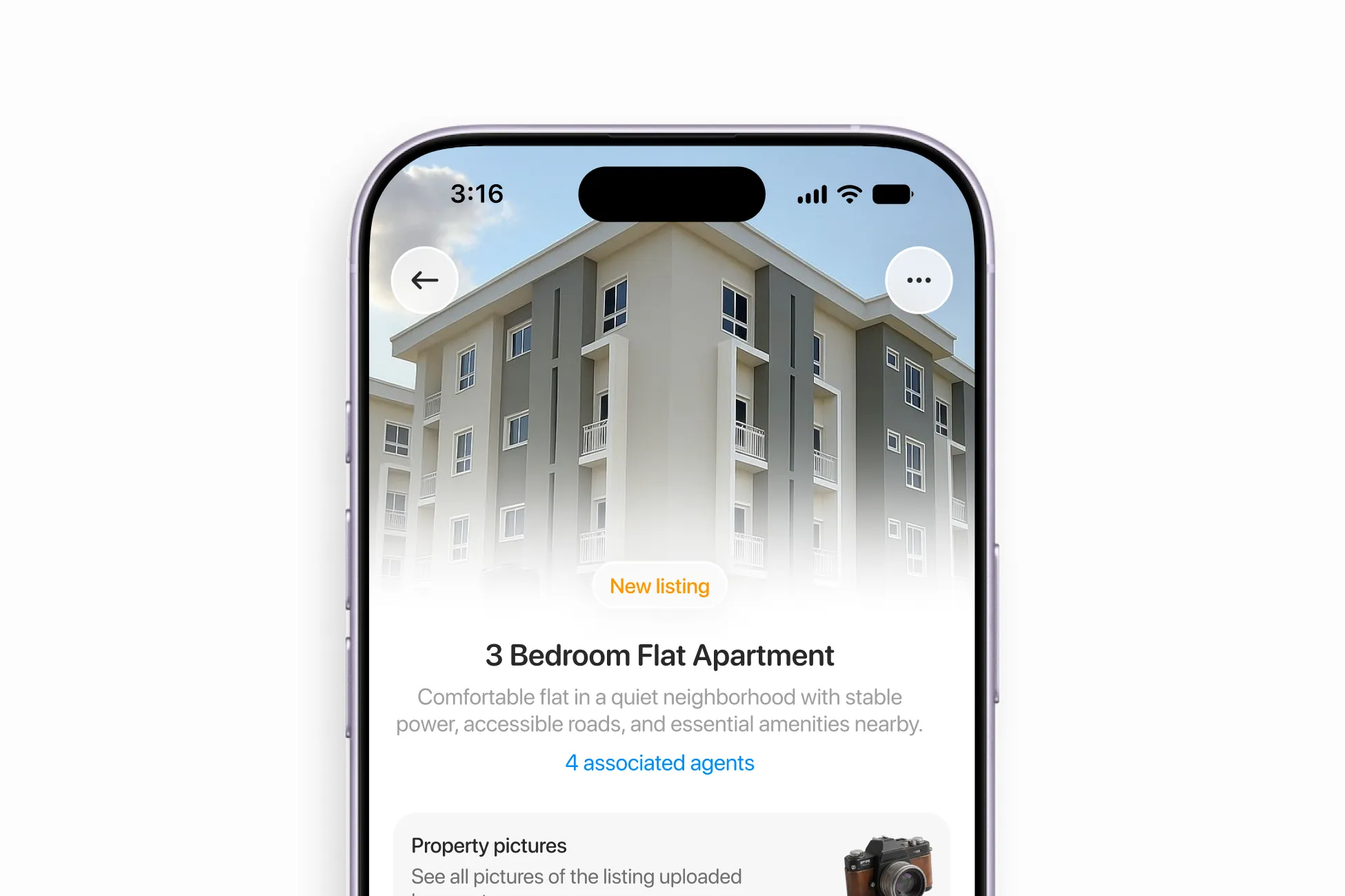
Because agents were responsible for taking photos and documenting apartment details, the same property could be uploaded multiple times by different agents. As a result, a single search could return several versions of the same apartment, each with different photos but identical underlying information. This would clutter search results, make discovery more difficult, and create a frustrating experience for house hunters trying to compare genuinely different options.
To fix this I made the agents attach the landlords profile to the listing and then I made the landlords profile the common denominator across all listings, so even if there were over 20 agents listing the same property, as long as they all had the same landlord in common only one copy of the listing would show up in the discovery / search page, if the hunter then clicked on the listing they would see all the agents associated with it and all of their different fees too.
Initial Hypothesis & Stakeholders Analysis

Caption 1
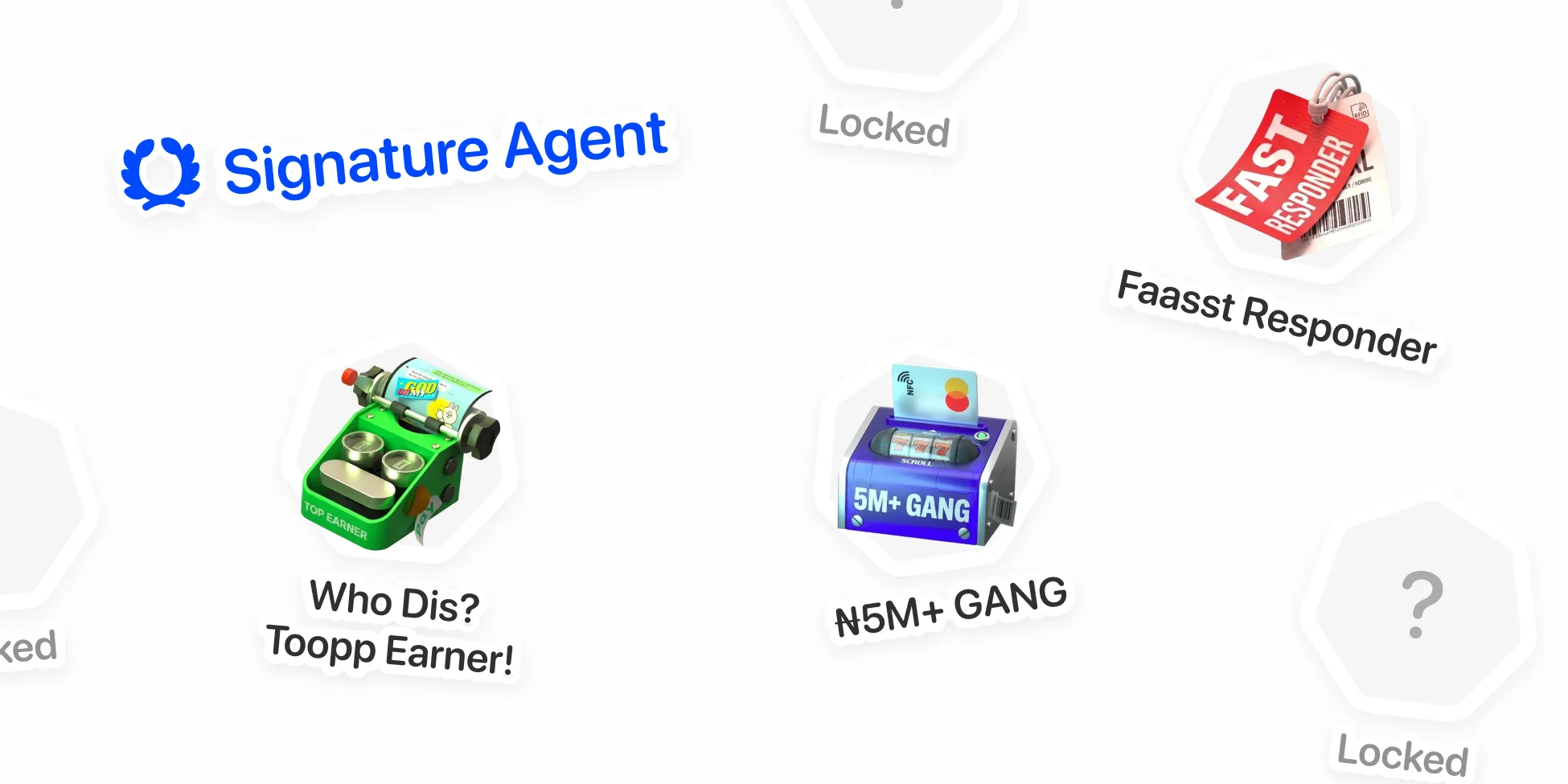
I also designed badges for agents to help build trust, because a rating number alone wouldn't do that well enough.
A first-time hunter looking at "4.6 stars" still has no idea what that number is actually measuring, or whether it's been earned through real performance or padded by a number of friendly reviews early on. The main problem I needed to solve wasn't displaying trust, it was making trust legible at a glance, so a hunter could look at an agent's profile for two seconds and get an accurate read on whether this person is reliable, without having to dig through their profile details.
Caption 1
That's what the badge system I added does.
Instead of having users interpret a single aggregate score, I broke trust down into the key specific behaviors that actually matter to a hunter and made each one its own visible, earned badge.
The trust system has two kinds of badges, the first is individual badges, these are a collection of badges that can be gotten only after an agent completes a specific task, a specific cluster of individual badges must be unlocked by agents as one of the prerequisites to getting the signature badge which is the second kind of badge.

Caption 1
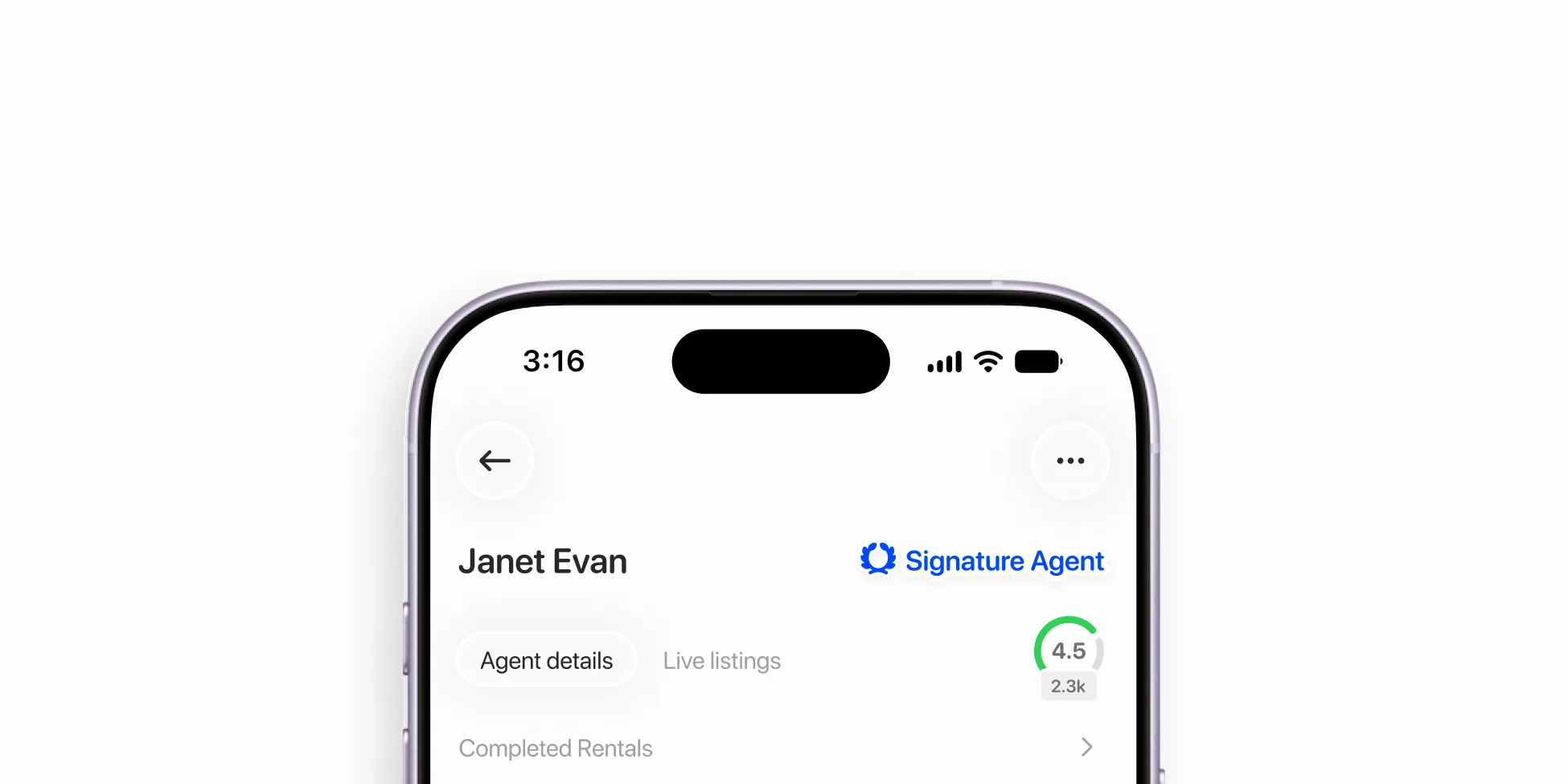
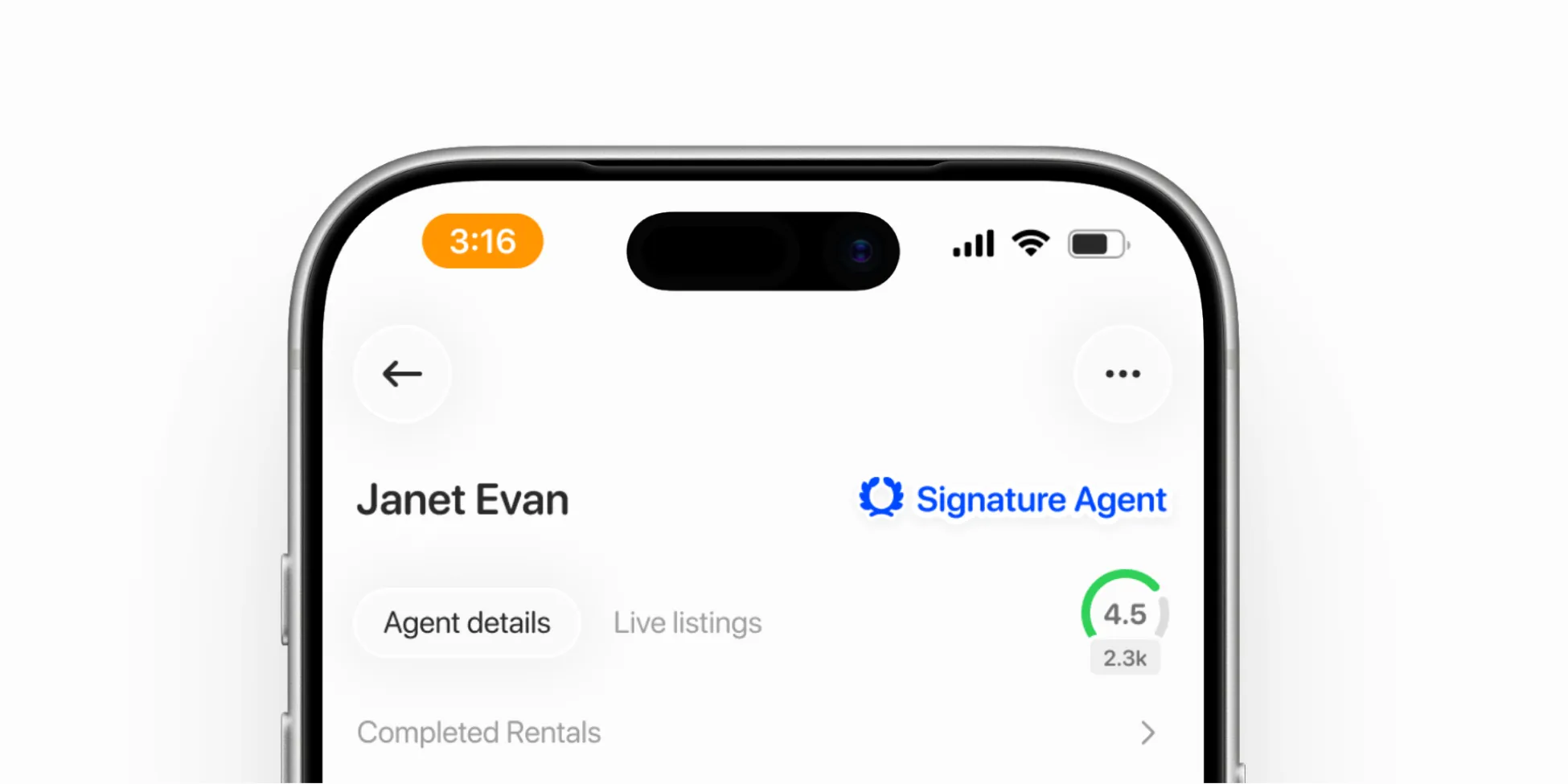
The second kind of badge is the Signature Agent badge, the highest level badge that can only be unlocked by agents who have a combination of top ratings, fast response times, and a specific combination of individual badges.
This is the platform's strongest trust signal, and I deliberately made it expensive to earn and placed prominently. A hunter who sees it knows the platform has already done the bulk of the verification work for them: this agent has been tested across volume, time, and consistency, and passed.
The badge system also serves a second purpose as an incentive structure. Because badges are visible and aspirational, they give agents something to work toward beyond the next transaction's fee.
An agent chasing a Signature badge has a direct incentive to respond faster and perform consistently well, which means the platform's accountability problem gets partially solved by agents competing for status rather than purely by punitive review systems.
I also considered a more aggressive gamification layer: a weekly leaderboard ranking agents by transaction volume, similar to what you'd see on a sales floor, but I ended up removing it because it would push agents toward closing as many deals as possible as fast as possible, which is the exact opposite of the careful, consistent service the badge system is designed to reward.
The Lagos house hunting problem isn't just one of high fees, it is a trust problem built on scarcity, fragmented information, and weak accountability.
The goal of this case study was never to pretend agents do not matter. That would be naive. Agents are part of the market’s discovery mechanism, and removing them entirely would solve nothing.
What the product tries to do instead is make the existing system harder to exploit and easier to trust. By shifting visibility, reputation, and verification onto the people who actually move through the market every day, the platform turns trust into something that can be earned, measured, and used. Bad behavior becomes more expensive, good behavior gets rewarded, and the house hunter gets a clearer picture of who they are dealing with before wasting time or money.
At its core, this is a marketplace design problem, but more importantly, it is an incentive design problem. If the system rewards opacity, then opacity wins. If it rewards accountability, consistency, and verified performance, then the market starts to behave differently.
Closing Thoughts
Caption 1
Connect to Content
Add layers or components to make infinite auto-playing slideshows.
02. My redesign of some key interfaces
Caption 1

How I Made House Hunting in Lagos More Convinient and Cheaper for Residents
9th July, 2026
Overview
"Lagos state's housing agents are scammers"
Whether true or not, this is the perception many Lagos house hunters hold. Stories of inflated rents, excessive finders fees, and misleading listings are common enough that distrust now shapes the entire rental experience.
This isn't a new issue really, it has been around for a long time, but a while ago I saw a tweet on X (attach link to tweet) where someone asked if the techies couldn't solve this problem. And that's when I decided to take a stab at it.
In this case study I will walk you through my thought process for my solution to this issue, this includes;
Research
Initial Hypothesis & Stakeholder Analysis
Listing Mechanics & Accountability Design
Research
To start, I first wanted to understand how house hunting actually works, turns out that the entire system is very informal really.
Let me give a short version of what the process is like.
A hunter *short for house hunter who is packing out / leaving their current apartment contacts an agent and informs them that they need a new place, they tell the agent everything that they want with this new place, from their preferred location for the new apartment, to the number of rooms, preferred amenities; steady electricity, running water etc.
The hunter can customise as much as they want, and with this information the agent starts looking for the best fit for them, once they find a number of good options within their clients price range and having the right mix of amenities, they invite them for a tour of the place and if it suits their taste then they start negotiating with the landlord, once both parties agree on the terms then the hunter pays the rent, gives the agent their finders fee and everyone goes their way.
This is the best case scenario, and usually how it goes in most states.
Lagos is a bit different though.
Demand for housing is extremely high, particularly in prime areas. Available apartments are limited and very costly, information is fragmented, and prospective tenants often have little visibility into alternative options.
This creates a significant information asymmetry. Agents usually know more about pricing, availability, and competing demand than either landlords or tenants.
So unless your father has a house in Lagos or you have a connection who links you up there is no avoiding the agents and their high fees, they are the ones who put in the leg work in finding the right apartments, and they know exactly where to look too.
The house hunting problem wasn't simply one of bad actors or high prices in the simple sense, it was an information problem. The market rewarded information holders, and agents squeezed house hunters because they know this.
Initial Hypothesis & Stakeholders Analysis
My initial assumption was simple: cut-out the agents, connect landlords directly with tenants and be done with it.
But after researching the market and actually learning of how the process works, I knew this would likely fail. Agents aren't merely extracting value from the system, they were performing a function neither landlords nor tenants wanted to do themselves.
They were information brokers, discovering vacancies that would otherwise be hard to find, they coordinated inspections, and connected both sides of the market.
The solution wasn't going to be as simple as removing the intermediary. It was figuring out a way to make the intermediary accountable & transparent.
Listing Mechanics & Accountability Design
So... how do I make agents accountable since I can't cut them out because doing that would destroy the discovery mechanism of the market.
Incentives, that's how. I needed to find ways to make good behaviour profitable and bad ones expensive. Because the current system rewards:
Information Hoarding
Inflated Fees
Opaque Pricing
Reputation Free Transactions
A bad agent and a good one both look the same to a first-time tenant and I need to change that.
My first design choice was making the landlords the ones who listed vacancies in their buildings and agents could apply to be associated with the listing and bring potential tenants.
Wouldn't work, after stress testing this model I ditched it because firstly it burdened the landlords with extra responsibilities, with this model they would have to take the pictures of the apartment and list out all the amenities before sharing it on the platform, with the current model they didn't have to do any of that, so getting them to use a platform with this setup would be really hard because it added too much to the plate of the stakeholder with the weakest incentive to participate in the first place.
Another issue with this model, and the biggest by far was how it didn't really support my goal of making agents more accountable, with this model the reputation system I planned to use would be attached to the wrong stakeholder (landlords). Most landlords only interact with the platform when a vacancy becomes available, after which their profile may remain dormant for years. This would make it difficult for meaningful reputation signals to accumulate over time.
Agents, by contrast, are persistent participants, and they facilitate hundreds or thousands of transactions within that same period.
So with this new knowledge I tweaked the model a bit, I made the persistent profiles, and the ones that could be rated; that of agents. This also fixed the issue of making the landlords take on more responsibility than before because now the agents were the ones who had to take pictures of the apartment and log the available amenities before listing it, something there were already doing in the current model.
With this improved model though, another issue emerged: duplicate listings.
Because agents were responsible for taking photos and documenting apartment details, the same property could be uploaded multiple times by different agents. As a result, a single search could return several versions of the same apartment, each with different photos but identical underlying information. This would clutter search results, make discovery more difficult, and create a frustrating experience for house hunters trying to compare genuinely different options.
To fix this I made the agents attach the landlords profile to the listing and then I made the landlords profile the common denominator across all listings, so even if there were over 20 agents listing the same property, as long as they all had the same landlord in common only one copy of the listing would show up in the discovery / search page, if the hunter then clicked on the listing they would see all the agents associated with it and all of their different fees too.
Caption 1
This also gives landlords direct gatekeeping authority over who represents their property.
I added a Requests section for the Landlord facing side of the platform, so before an agent's listing can go live they have to send a request to the landlord associated with the listing asking to be a representative for the property. This shows up in the Requests section where the landlord can approve or deny them.
This model created the foundation for a reputation-driven marketplace, where trust could accumulate around agents over time.
Caption 1
I also designed badges for agents to help build trust, because a rating number alone wouldn't do that well enough.
A first-time hunter looking at "4.6 stars" still has no idea what that number is actually measuring, or whether it's been earned through real performance or padded by a number of friendly reviews early on. The main problem I needed to solve wasn't displaying trust, it was making trust legible at a glance, so a hunter could look at an agent's profile for two seconds and get an accurate read on whether this person is reliable, without having to dig through their profile details.
Caption 1
That's what the badge system I added does.
Instead of having users interpret a single aggregate score, I broke trust down into the key specific behaviors that actually matter to a hunter and made each one its own visible, earned badge.
The trust system has two kinds of badges, the first is individual badges, these are a collection of badges that can be gotten only after an agent completes a specific task, a specific cluster of individual badges must be unlocked by agents as one of the prerequisites to getting the signature badge which is the second kind of badge.
Caption 1
Caption 1
The second kind of badge is the Signature Agent badge, the highest level badge that can only be unlocked by agents who have a combination of top ratings, fast response times, and a specific combination of individual badges.
This is the platform's strongest trust signal, and I deliberately made it expensive to earn and placed prominently. A hunter who sees it knows the platform has already done the bulk of the verification work for them: this agent has been tested across volume, time, and consistency, and passed.
The badge system also serves a second purpose as an incentive structure. Because badges are visible and aspirational, they give agents something to work toward beyond the next transaction's fee.
An agent chasing a Signature badge has a direct incentive to respond faster and perform consistently well, which means the platform's accountability problem gets partially solved by agents competing for status rather than purely by punitive review systems.
I also considered a more aggressive gamification layer: a weekly leaderboard ranking agents by transaction volume, similar to what you'd see on a sales floor, but I ended up removing it because it would push agents toward closing as many deals as possible as fast as possible, which is the exact opposite of the careful, consistent service the badge system is designed to reward.
Caption 1
Connect to Content
Add layers or components to make infinite auto-playing slideshows.
02. My redesign of some key interfaces
Closing Thoughts
The Lagos house hunting problem isn't just one of high fees, it is a trust problem built on scarcity, fragmented information, and weak accountability.
The goal of this case study was never to pretend agents do not matter. That would be naive. Agents are part of the market’s discovery mechanism, and removing them entirely would solve nothing.
What the product tries to do instead is make the existing system harder to exploit and easier to trust. By shifting visibility, reputation, and verification onto the people who actually move through the market every day, the platform turns trust into something that can be earned, measured, and used. Bad behavior becomes more expensive, good behavior gets rewarded, and the house hunter gets a clearer picture of who they are dealing with before wasting time or money.
At its core, this is a marketplace design problem, but more importantly, it is an incentive design problem. If the system rewards opacity, then opacity wins. If it rewards accountability, consistency, and verified performance, then the market starts to behave differently.